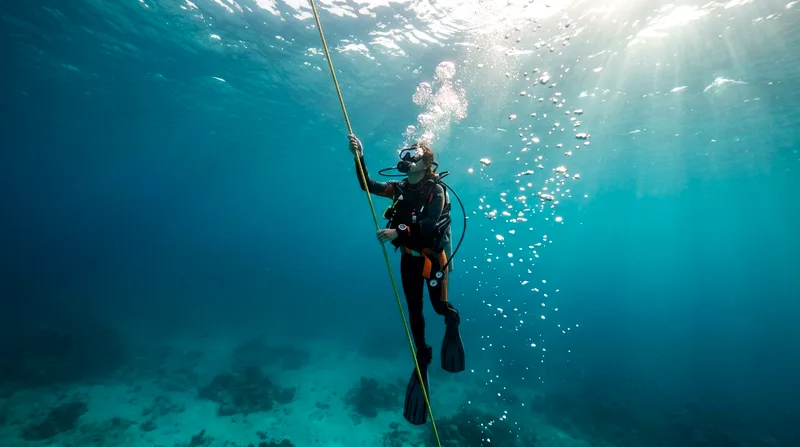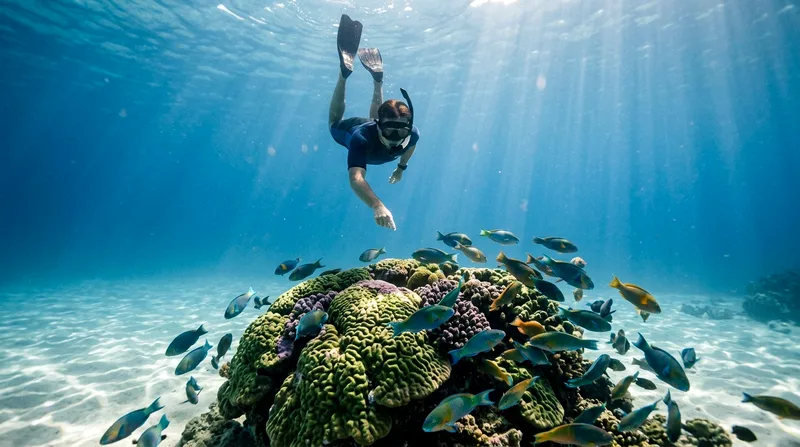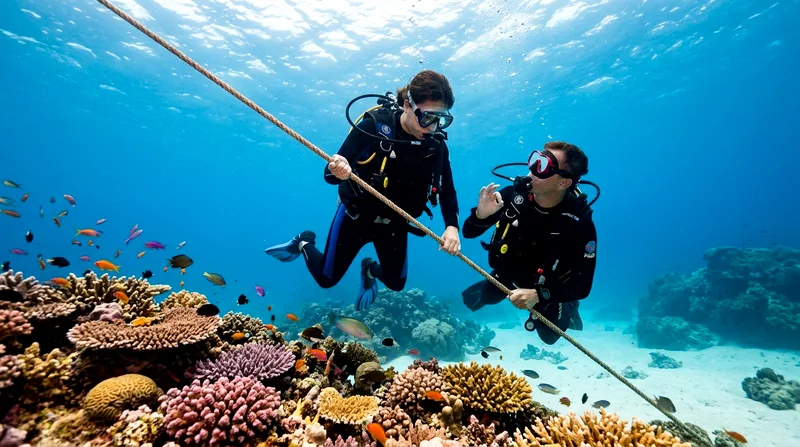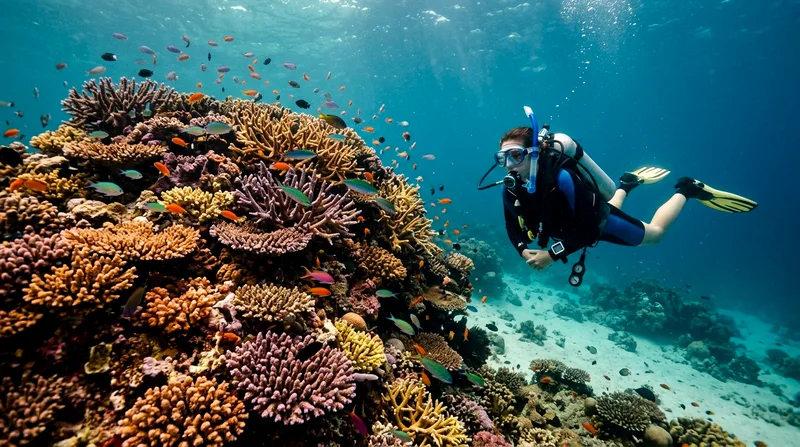
Racha island diving tour Phuket guide: Racha Yai and Racha Noi dive sites, pricing, best season, and what certified and new divers should expect.
What Is Racha Island and Why Dive There
Racha Island — properly two islands, Racha Yai and Racha Noi — sits around 20 to 25 km south of Phuket in the Andaman Sea, roughly a 45- to 75-minute boat ride depending on the vessel and departure point. Most racha island diving tour Phuket operators leave from Chalong Bay, the island's main dive-boat harbor, though some larger day-trip boats also run from Phuket Town piers. Unlike Phang Nga Bay, which is about limestone scenery and sea kayaking, Racha is a straightforward diving and snorkeling destination with little else going on besides a couple of beach resorts and restaurants.
I'd call it the most practical dive day trip Phuket offers, not the most spectacular. Compared with Koh Phi Phi's dive sites, Racha's reefs are calmer, shallower on average, and far less current-prone, which is exactly why dive schools use it for training and first-time try-dives.
Geography and marine ecosystem
Racha Yai is the larger, more developed island, with Koh Racha Resort and a couple of beach bays (Siam Bay, Ter Bay, Patok Bay) ringed by granite boulders and coral. Racha Noi, smaller and undeveloped, lies about 10 km further south and has rockier, deeper terrain. The reefs around both islands are a mix of hard coral gardens, boulder swim-throughs, and sandy patches that attract rays and the occasional reef shark. Visibility commonly runs 15 to 30 meters in good conditions, noticeably better than the murkier inshore sites around Phuket's west coast beaches.
Why it's ideal for divers
Three things make Racha work for a broad range of divers: it's close enough for a half-day or full-day trip without burning a whole vacation day, the sites are shallow enough (5 to 25 meters) for both Open Water students and experienced divers on the same boat, and the water is calmer than Racha Noi or the open sites near Koh Phi Phi. If you want dramatic topography or bigger animals, Koh Lanta's southern sites or the liveaboard routes to Koh Lipe and the Similan Islands go further — Racha won't give you manta ray season or deep pinnacle drama. It gives you reliable, easy, pretty diving.
Racha Yai vs. Racha Noi Dive Sites
Most day boats split time between Racha Yai's bays for the first dive and either a second Racha Yai site or a run down to Racha Noi, conditions permitting. They're different enough in character that which one your tour visits matters.
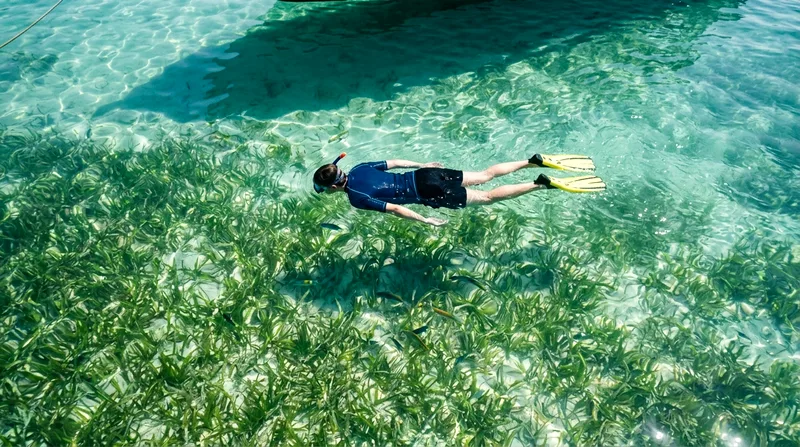
Racha Yai suits beginners and casual fun divers, while Racha Noi rewards certified divers willing to go deeper and further.
Racha Yai vs Racha Noi dive sites for a racha island diving tour Phuket
| Site | Typical Depth | Current | Best For | Marine Life Highlights |
|---|---|---|---|---|
| Racha Yai (Siam Bay, Ter Bay) | 5-18 meters | Mild | Beginners, try-dives, Open Water certification | Staghorn coral, clownfish, turtles, rays |
| Racha Yai (Kon Dao) | 10-20 meters | Mild to moderate | Confident beginners, fun divers | Coral slopes, reef fish schools |
| Racha Noi | 15-30+ meters | Moderate, sometimes strong | Certified divers with experience | Leopard sharks, barracuda, occasional reef sharks |
Depths, currents, and sightings vary by trip and season; confirm site plans and conditions with your dive operator before booking.
Racha Yai highlights and difficulty
Racha Yai's main sites — Siam Bay, Ter Bay, Kon Dao, and the Staghorn Reef off Patok Bay — sit mostly between 5 and 18 meters, with gentle slopes and minimal current. This is beginner-friendly terrain: good for Discover Scuba try-dives, Open Water certification dives, and relaxed fun dives for anyone who'd rather look at fish than fight a current. Expect staghorn and table coral, clownfish, parrotfish, the occasional blue-spotted ray, and decent odds of a turtle sighting. It's busy, though — on a clear weekend you'll share the bay with several other dive boats and a lot of snorkel day-trippers.
Racha Noi highlights and difficulty
Racha Noi sits further out and drops deeper, with granite boulder formations down to 25-30+ meters and occasionally stronger current. It's quieter — fewer boats bother making the extra run — and has a better shot at bigger life: leopard sharks resting on the sandy bottom, occasional reef sharks, and bigger schools of fusiliers and barracuda in open water. This is the site to request if you're a certified diver with at least a handful of logged dives; it's not where dive centers send first-timers, and visibility can be more current-dependent than Racha Yai's sheltered bays.
How to Visit: Independent vs. Guided Tours
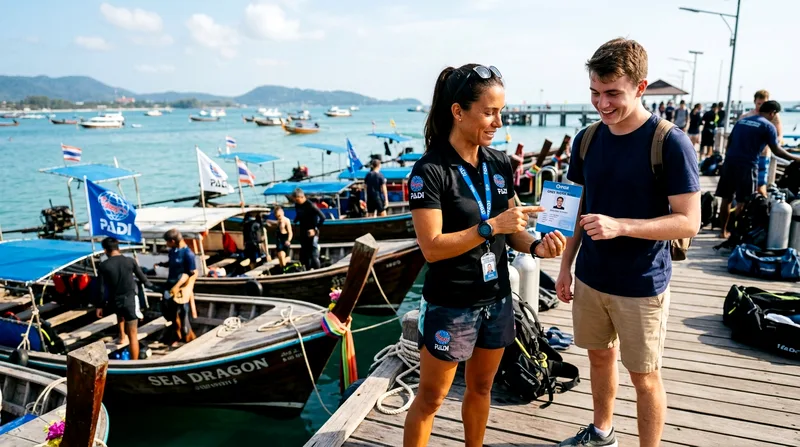
There's no public ferry schedule to Racha Island the way there is to Koh Phi Phi or Koh Lanta, so almost everyone arrives via a chartered dive or speedboat tour. That shapes the whole decision.
Booking a guided tour operator
Guided tours, run by PADI dive centers based in Chalong Bay or Patong, are the standard route. They handle permits, tanks, weights, boat transfer, and a divemaster who checks your certification card (or runs your try-dive briefing) before anyone gets in the water. Reputable operators — look for PADI 5-Star or similar affiliation, and check recent reviews rather than taking a travel agent's word for it — will ask to see your certification card and logbook if you want to dive Racha Noi or go beyond 18 meters. Groups like Andaman Discoveries also run community-based and marine-conservation-linked trips in the region, worth considering if you want your trip to support reef monitoring work rather than just a straight dive charter.
Self-guided diving logistics
Fully independent diving — chartering your own longtail or renting a private speedboat without a dive center involved — is possible but impractical for most visitors. You'd need your own gear, tanks sourced and filled locally, and a local boat operator willing to take divers without a dive guide, which most won't do for insurance reasons. Even experienced divers who own their own gear generally book through a dive shop for tank fills, boat slots, and site knowledge. If you're staying at Koh Racha Resort on Racha Yai itself, you can dive or snorkel directly off the beach with house dive operators, skipping the day-boat commute — a genuinely good option if you want multiple relaxed days rather than one rushed trip from Phuket.
Tickets, Entry, and Tour Pricing
There's no separate "entry ticket" for Racha Island in the way there is for some Thai national parks, though a national park fee (collected by the boat operator, typically a few hundred baht) applies since the surrounding waters fall under marine park management. Pricing instead centers on the boat tour package itself.
Typical tour package inclusions
A standard two-tank Racha Island diving day trip from Phuket generally includes hotel pickup, speedboat or dive-boat transfer, tank and weight rental, a divemaster-guided two-dive itinerary, lunch on board or on the island, and park fees. Full gear rental (BCD, regulator, wetsuit, mask, fins) usually costs extra if you don't already have your own — budget roughly 500-1,000 THB more per day for a complete rental set, though exact rates vary by operator. Snorkelers joining the same boat typically pay less and spend surface time over shallower reef while divers are underwater. Always compare current prices and inclusions before booking, since fuel surcharges and seasonal rates shift what's bundled.
What affects pricing
Expect to pay more for Discover Scuba try-dives (extra instructor time and a confined-water briefing), for Racha Noi add-ons on top of a Racha Yai itinerary, and for private or small-group boats versus the standard shared day-boat. PADI Open Water certification courses that use Racha Island for open-water dives run over two to three days and cost considerably more than a single fun-dive trip, since the price covers classroom time, pool sessions, and course materials. Speedboat transfers cost more than the slower traditional dive boats but save you roughly 20-30 minutes each way — worth it if you get seasick or have limited time in Phuket.
Best Time to Dive Racha Island
Racha Island is diveable nearly year-round, which is part of its appeal compared with sites like the Similan Islands that close completely during monsoon season (roughly mid-May to mid-October). Racha's relative shelter means boats keep running even when conditions elsewhere on the Andaman coast get rough.
Seasonal conditions and visibility
The dry season, November through April, gives the most reliable visibility and calmest seas — this is peak diving season across Phuket, Krabi, and Koh Phi Phi alike. December through March tends to have the clearest water and least rain. During the southwest monsoon (roughly May to October), Racha's east-facing bays stay comparatively sheltered, but expect more rain, choppier crossings, and reduced visibility on any given day. It's not a wash-out season, unlike diving around Khao Lak or the Similans, which effectively shut down — Racha remains one of the few decent dive options in Phuket during the wetter months.
Avoiding peak crowds
December and January bring the heaviest boat traffic, with Racha Yai's main bays crowded by mid-morning. If crowding bothers you, book an early departure (boats leaving Chalong before 8 am beat the rush) or consider a trip during the shoulder months of November or April, when weather is still good but tourist numbers are thinner. Weekends are busier than weekdays regardless of season, since local dive centers and Phuket Town-based tour groups both default to Racha for convenience.
Nearby Add-Ons and Extensions
Because Racha is a short hop from Phuket, it's often paired with other stops rather than treated as a standalone destination — particularly on speedboat itineraries.
Phi Phi Islands combination tours
Some operators run combined Racha Island and Phi Phi Islands day trips, though it makes for a long day — Phi Phi is roughly 1.5 to 2 hours from Phuket by speedboat, so stacking both destinations means less time at each and an early start, often before 7 am. If diving is the priority, I'd skip the combo and book a dedicated Racha trip instead; Phi Phi's Maya Bay and viewpoint are worth a separate day, especially since Phi Phi also has its own respected dive sites around Koh Bida Nok that deserve unhurried time.
Snorkeling and other water activities
Non-divers aren't left out — Racha Yai's shallow bays are genuinely good snorkeling, arguably better than most snorkel spots directly off Phuket's west coast beaches. A racha island snorkeling trip price generally runs lower than the diving package since it skips tank rental and divemaster guiding, often bundled onto the same boat as the divers. Some tours tack on a short stop at Coral Island (Koh Hey) on the way back toward Chalong Bay, which adds beach time but little additional underwater interest if you've already dived Racha.
Frequently asked questions
Do I need a diving certification for Racha Island tours?
No certification is required for Discover Scuba try-dives or snorkeling trips — a divemaster briefs and accompanies you in shallow water, usually no deeper than 12 meters. For independent fun dives beyond that depth, or any trip to Racha Noi, operators will ask to see a PADI (or equivalent) certification card and sometimes a logbook, especially for dives below 18 meters.
How long does a Racha Island diving tour take?
Most day trips run 7-8 hours door to door, including hotel pickup, the boat crossing (45-75 minutes each way), two dives with a surface interval, and lunch. Half-day single-dive trips exist but are less common; speedboat operators sometimes offer shorter afternoon options.
What marine life will I see at Racha Island?
Expect staghorn and table coral, clownfish, parrotfish, blue-spotted rays, and a reasonable chance of turtles at Racha Yai. Racha Noi adds better odds of leopard sharks resting on sand, barracuda schools, and occasional reef sharks, though sightings are never guaranteed on any single dive.
Is snorkeling available on Racha Island tours?
Yes — nearly every dive boat also carries snorkelers, who stay in the shallow bays at Racha Yai while divers go deeper. A racha island snorkeling trip price is typically lower than the diving package since it excludes tank rental and dive guiding.
What is the best season for diving Racha Island?
November to April is the dry season with the calmest seas and best visibility, peaking December through March. Racha stays diveable through the May-October monsoon too, sheltered enough to keep running when sites like the Similan Islands close entirely, though expect choppier crossings and lower visibility on rainier days.