Phuket Seafood Dinner Cruise: Tours, Prices and Booking
Compare Phuket seafood dinner cruise options — sunset sailing, buffet spreads, group sizes and prices — to book the right evening cruise for you.
8 min read · 7 Oct 2026
Tours & activities
Compare Phuket food and culinary tours: street food walks, cooking classes, market tastings and private dining. Know what to book and when.
Phuket food and culinary tours split into a handful of formats, and the right one depends less on budget than on how you like to spend an evening. Some travelers want to walk, graze, and people-watch. Others want an apron, a wok, and something to show for the afternoon. Neither approach is wrong, but conflating them leads to disappointment — booking a sit-down cooking class when you actually wanted a chaotic market crawl through Chillva Market will leave you bored by hour two.
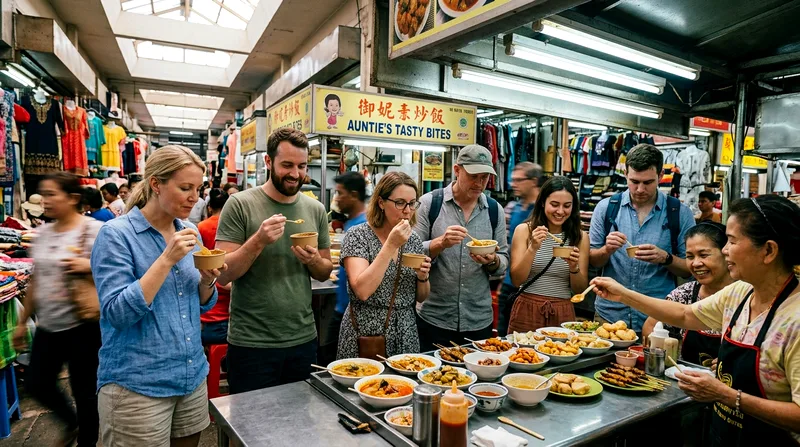
Street food tours work best for groups who want constant movement and don't mind eating standing up at plastic tables. Cooking classes suit people who learn by doing and want a souvenir skill rather than a souvenir shirt. Market tasting tours sit in between — less commitment than a full class, more substance than a quick walk. Private food tours and seafood-focused outings cater to travelers with specific dietary needs or those who'd rather not share a guide with ten strangers.
If you like eating on your feet and trying six or seven small dishes rather than one big meal, a street food tour is the better fit. These typically run through Phuket Old Town's shophouse streets or a night market like Chillva, stopping at four to eight vendors over two to three hours. Expect moo ping (grilled pork skewers), oyster omelets, roti, and maybe a bowl of boat noodles. The pace suits solo travelers and couples well; it's less ideal for families with young kids, since markets get crowded and the walking pace doesn't pause for tantrums. Nightlife fans often tack this onto a Patong Beach evening, eating first, drinking after.
Cooking classes suit travelers who want to replicate a green curry or pad thai back home, not just eat one. Most run three to four hours, often including a market visit beforehand to buy ingredients — useful context that street food walks skip. Senior travelers and families with older children (roughly age eight and up) tend to do well here, since the pace is seated and structured rather than a standing crawl. The trade-off: you'll spend more time chopping and stirring than sampling variety, so if you want to taste twenty things in one evening, this isn't it.
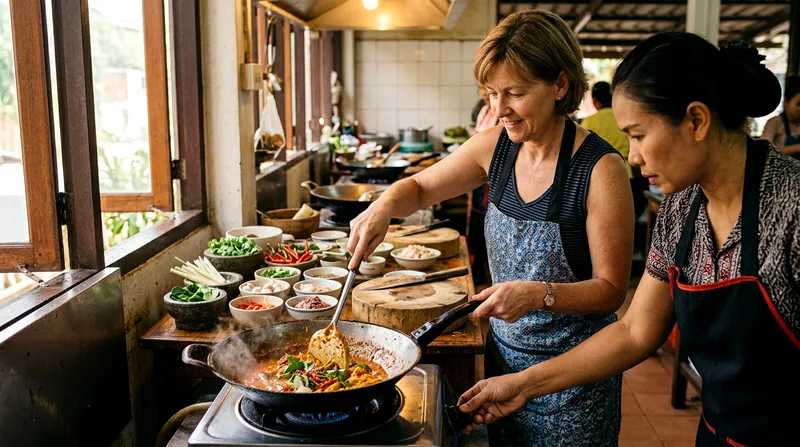
Beyond street walks and classes, Phuket's culinary tour market includes market tasting tours, private/seafood-focused outings, and the occasional culinary workshop pitched at a more serious skill level than a standard tourist class. Each has a distinct rhythm, and knowing the difference before you book saves an evening.
Market tasting tours are the middle ground — a guide walks you through a wet market or produce market, explaining ingredients like galangal, shrimp paste, or local fruit, then leads you to two or three food stalls for actual eating. These run shorter than full cooking classes, usually two hours, and suit curious travelers who want context without commitment. Seafood tours, often run from areas near Kata Beach or Bang Tao Beach, focus on grilled fish, prawns, and crab at beachfront or market settings — a natural fit for fishermen and seafood-focused travelers who've already spent a day out on Phang Nga Bay and want their catch-adjacent cuisine explained properly.
Private food tours cost more per person but solve two real problems: dietary restrictions and pacing. If you're vegetarian, halal, or managing a serious shellfish allergy, a private guide can route around problem stalls entirely, something a fixed-group tour can't always do. Culinary workshops — longer, more technical sessions sometimes spanning a full day — suit travelers who've already taken a basic class elsewhere (Chiang Mai, Bangkok) and want to go deeper into technique, like curry paste pounding or stock building from scratch.
Street food walks suit grazers who want variety fast, while cooking classes suit travelers who want a transferable skill, not just a full stomach.
Phuket food and culinary tours compared by format, duration and group size
| Tour Type | Typical Duration | Group Size | Physical Activity | Best For |
|---|---|---|---|---|
| Street food / night market walk | 2-3 hours | Small group (6-15) | Moderate walking | Variety seekers, solo travelers, couples |
| Cooking class | 3-4 hours | Small group (4-10) | Low, mostly seated/standing | Families, seniors, hands-on learners |
| Market tasting tour | 1.5-2.5 hours | Small group (4-12) | Light to moderate walking | Curious first-timers, short on time |
| Private food tour | 2-4 hours, flexible | 1-4 people | Flexible, customizable | Dietary restrictions, special pacing |
| Seafood-focused tour | 2-3 hours | Small group (4-10) | Low walking, seated eating | Fishermen, seafood lovers |
| Culinary workshop | 4-6+ hours | Small group (4-8) | Low, technical and detailed | Serious cooks, repeat visitors |
Durations and group sizes are typical ranges; check the specific tour listing for exact details before booking.
These are the most affordable and most commonly booked category, typically covering a two-to-three-hour window in the early evening when markets are in full swing. Phuket Town's Sunday Walking Street and the Chillva Market area are common anchors because they concentrate dozens of vendors into walkable zones. Expect moderate walking — not strenuous, but not wheelchair-friendly in older, narrower lanes. Portions are small by design, so arrive hungry and skip lunch beforehand if you can.
Standard cooking classes run three to four hours and cover three to five dishes — commonly a curry, a stir-fry, a soup like tom yum, and a dessert such as mango sticky rice. Many operators near Laguna Phuket and Bang Tao Beach pitch these at resort guests who want a half-day activity without leaving the area. Workshops go longer, sometimes five-plus hours, and dig into fewer dishes but more technique. If your main goal is a quick, fun afternoon, stick to the standard class; workshops suit travelers with genuine interest in Thai culinary method, not just a fun photo op.
Not all food tours are built the same, and the listing page often hides the details that matter most. Before you book, read past the headline description and check what's actually included versus what you'll pay for on the spot.
Check whether drinks are included — many street food tours cover food tastings but charge extra for beer or fresh coconut water. Group size matters more than people expect: a 15-person street food walk means you'll wait in line at each stall, while an 8-person group moves faster and gets more guide attention. Look for a clear cancellation policy, ideally free cancellation up to 24 hours before start time, since weather and flight changes are common in Phuket. Avoid tours with vague inclusion lists like "various local dishes" — specificity in the listing usually signals a more organized operator.
Confirm the walking distance and terrain for street tours — Phuket Old Town's streets are flat and manageable, but some night market tours involve uneven ground or stairs. For cooking classes, check whether the class is fully hands-on or partly demonstration; some budget options have you cooking only one dish while watching the rest. If you have dietary restrictions, message the operator directly before booking rather than assuming the listing covers it — vegetarian and halal options exist widely in Phuket, but shellfish-free guarantees require explicit confirmation given how often fish sauce and shrimp paste appear in base recipes.
Phuket's dry season, roughly November through April, is the easiest window for outdoor street food tours and market walks — less rain disruption, more comfortable evening walking temperatures. The rainy season, May through October, doesn't cancel tours outright, but outdoor market stalls sometimes close early or relocate indoors during heavy downpours, which can shorten a planned route.
Peak season (December to February) is when Phuket gets busiest with European travelers escaping winter, so popular cooking classes and small-group street tours can sell out 3-5 days ahead — book a week out if your dates are fixed. Shoulder months like May, June, and September see fewer crowds and sometimes more flexible scheduling, useful if you prefer spontaneity. For a private food tour or seafood-focused outing timed around a specific evening — say, your last night in Phuket before heading to Krabi or Koh Phi Phi — book at least 48 hours ahead to guarantee guide availability. Always compare current prices and reviews before booking, since availability shifts fast in high season.
With categories and timing covered, the last decision point is matching the tour to your actual travel style rather than what looks good in photos. A cooking class photographs better, but a street food walk often delivers more genuine local color — think plastic stools, hand-written menus, and vendors who've run the same stall for twenty years in Phuket Town.
Street food tours and market tastings are generally the most budget-friendly category since you're paying for a guide and small tastings rather than ingredients and kitchen time. Cooking classes cost more because they include groceries, equipment use, and usually a market visit built into the session. If budget is tight, a self-guided walk through Chillva Market with a food app for translation can replace a paid tour entirely — not as informative, but functional. For pace, picture your ideal evening: constant movement and new flavors every fifteen minutes (street tour), or slower, focused, one task at a time (cooking class). Mixing both on different nights of a Phuket stay — paired perhaps with a day trip to Phang Nga Bay — gives a fuller picture of the region's food than either alone.
Most street food and night market tours include a guide, 4-8 tastings across different stalls, and sometimes bottled water. Drinks beyond water, souvenirs, and transport to/from your hotel are often extra — check the listing. Cooking classes typically include a market visit, all ingredients, recipe cards, and the meal you cook, with transport sometimes bundled for resort-area classes near Bang Tao Beach or Laguna Phuket.
Prices vary by group size, inclusions, and whether it's private or shared. Street food and market tours tend to sit at the lower end of the tour market, while multi-hour cooking classes with market visits and multiple dishes cost more due to ingredient and equipment costs. Private tours and specialized seafood experiences price higher per person. Always check current prices when booking, since rates shift with season and group size.
Book during the dry season (November-April) for the most reliable outdoor market conditions. Within that window, book 3-7 days ahead during December-February peak season, since small-group tours fill up. In rainy season (May-October), tours still run, but book with some flexibility in case of schedule shifts due to heavy rain.
Vegetarian options are widely available and easy to request on most tours. Halal accommodations exist, particularly in Phuket Town given its historic Muslim community, but confirm directly with the operator. Severe shellfish allergies need explicit pre-booking confirmation, since Thai cooking relies heavily on fish sauce and shrimp paste even in non-seafood dishes — a private tour gives the most control here.
Street food and market tasting tours run 1.5 to 3 hours. Standard cooking classes run 3 to 4 hours including a market visit. Culinary workshops aimed at serious cooking enthusiasts can run 5 hours or longer. Choose based on your evening plans — a short market tour pairs well with a later night out in Patong Beach, while a full cooking class is usually an evening's main event.
Compare Phuket seafood dinner cruise options — sunset sailing, buffet spreads, group sizes and prices — to book the right evening cruise for you.
8 min read · 7 Oct 2026
Compare halal food tour options in Phuket — certified street food, restaurant tours, private vs group formats. A practical booking guide for Muslim travellers.
8 min read · 7 Oct 2026
A Phuket night market food guide with dish picks, price ranges, and transport tips — from Phuket Town's weekend market to Patong's stalls.
9 min read · 7 Oct 2026
Phuket food tour vs cooking class compared — cost, time, effort and learning outcomes — so you book the right culinary experience for your trip.
9 min read · 7 Oct 2026
Plan a Phuket street food tour old town: must-try dishes, guided vs self-guided options, timing tips, and what entry and booking actually involve.
9 min read · 7 Oct 2026
Compare Phuket cooking class types by price, market visits and group size. A practical guide to booking the right Thai cooking class for you.
8 min read · 7 Oct 2026