Compare speedboat and longtail tours in Phuket. See costs, comfort, group sizes, islands visited, and crowds to pick the right boat for your trip.
Quick Comparison: Speedboat vs Longtail
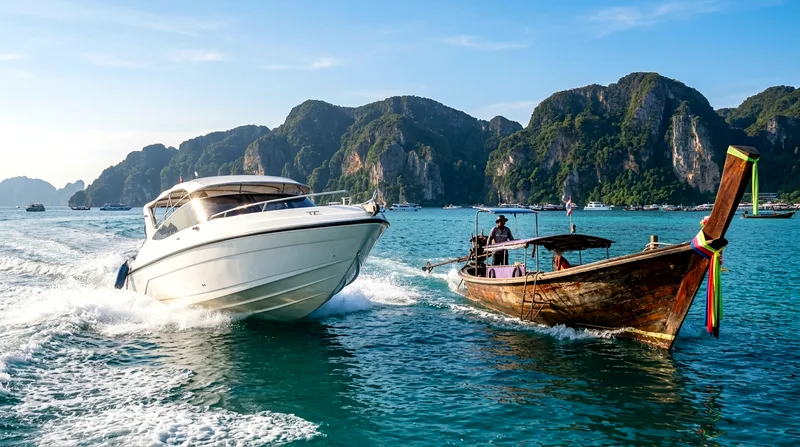
The Phuket speedboat vs longtail boat tour decision usually comes down to three things: how far you want to travel, how much time you have, and how much engine noise you can tolerate for the sake of saving money. Speedboats are built for distance — they'll get you to the Similan Islands or Phi Phi and back in a single day, something a longtail simply can't do comfortably. Longtails are built for proximity — short hops to Coral Island, Bamboo Island, or a quiet bay off Phang Nga Bay, where the journey itself is part of the relaxation rather than something to endure.
I'd avoid picking based on price alone. A longtail trip to Coral Island might cost a third of a speedboat trip to Phi Phi, but they're not interchangeable products — one is a half-day paddle in calm water, the other is a full-day Andaman Sea crossing. Compare them on what you actually want from the day, not just the number on the booking page.
Speedboats win on distance and island count, longtails win on price and calm, unhurried stops near shore.
Phuket speedboat vs longtail boat tour comparison by cost, speed, and best use
| Boat Type | Typical Cost (per person) | Speed | Best For | Common Islands |
|---|---|---|---|---|
| Speedboat (shared tour) | approx. 1,800-3,500 THB | 25-35 knots | Multi-island days, longer distances | Phi Phi, James Bond Island, Similan |
| Speedboat (private charter) | approx. 8,000-18,000 THB (whole boat) | 25-35 knots | Families, groups wanting flexibility | Phi Phi, Phang Nga Bay, Hong Islands |
| Longtail boat (shared/group) | approx. 600-1,200 THB | 10-15 knots | Budget trips, short hops, couples | Coral Island, Bamboo Island |
| Longtail boat (private hire) | approx. 1,500-3,000 THB (whole boat, half-day) | 10-15 knots | Small groups, quiet bays | Nearby Phang Nga Bay coves, Koh Poda-style shallow stops |
Typical figures based on common published rates; prices vary by season, operator, and fuel costs, so check current prices when booking.
Speed and travel time
A speedboat cruises at roughly 25-35 knots, which means Phi Phi Islands — about 1.5 to 2 hours from Phuket by speedboat — becomes reachable as a day trip with several hours on location. The Similan Islands, further out and only seasonally accessible (roughly November to April, when the Andaman Sea is calmer), are realistically only doable by speedboat or a liveaboard, not a longtail.
Longtail boats run at a fraction of that speed, often 10-15 knots, with engines mounted on long drive shafts that are more about maneuverability in shallow water than covering distance. A longtail trip to Coral Island takes about 30-40 minutes each way; anything further than Phang Nga Bay's nearer limestone formations starts to eat into your day unreasonably. If your destination is more than roughly 20km offshore, a longtail is the wrong tool.
Typical itineraries
Speedboat day tours typically stack three to five stops: Phi Phi Leh's Maya Bay, Phi Phi Don for lunch, Bamboo Island for snorkeling, sometimes a detour to Khai Islands — all in eight to nine hours including hotel pickup. James Bond Island and Phang Nga Bay tours follow a similar multi-stop format, often adding a canoe stop through mangrove channels.
Longtail itineraries are shorter and simpler by design: one or two nearby islands, more time anchored, less time in transit. A typical Coral Island longtail half-day covers snorkeling and a beach stop, finishing in four to five hours. That's the trade-off in a sentence — speedboats pack in destinations, longtails give you more unhurried time in fewer places.
Cost: What You'll Actually Pay
Price is where the phuket speedboat vs longtail boat tour comparison gets most people's attention, and the gap is real. A shared speedboat tour costs roughly two to three times more than a shared longtail trip to a comparable nearby island. That premium pays for fuel, a bigger hull, and the engine power to cover 60-80km round trips rather than 10-15km.
Longtail boat hire price in Phuket stays low partly because these are small, locally owned wooden boats with modest fuel consumption and short routes. If you're booking a private longtail for a small group, splitting the cost among three or four people often makes it cheaper per head than a shared speedboat seat — worth doing the math before assuming speedboats are always pricier.
Speedboat pricing factors
Fuel is the biggest variable — speedboats burn significantly more than longtails per hour, and that cost gets passed on directly. Distance matters too: a Similan Islands run costs more than a Coral Island run because it's double or triple the round-trip distance. Private charters add a flat premium since you're paying for the whole boat regardless of group size, but for families of four or more, chartering can work out close to the per-person shared rate while giving you control over the schedule and stops.
Longtail boat pricing factors
Longtail pricing is mostly about hire duration and whether it's shared or private. A half-day shared seat to Coral Island is the cheapest option on this page. Private hire for two to three hours around a beach near Rawai or Chalong costs more per person if you're solo, but split four ways it's often a bargain. Watch out for boats that quote a "per boat" price without clarifying how many hours or stops are included — always confirm duration before paying.
Comfort and Group Size Breakdown
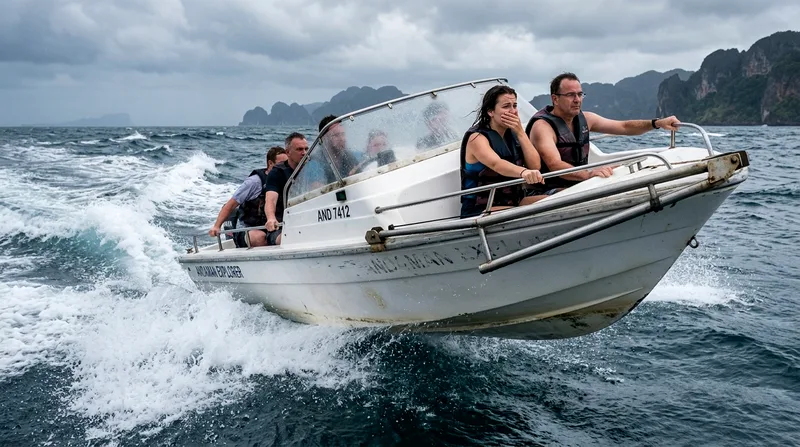
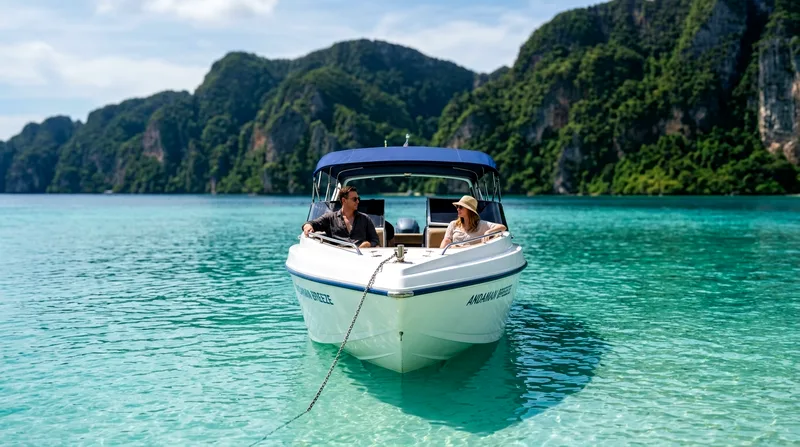
Speedboats generally carry 15-30 passengers in a shared tour, with padded bench seating, a roof or canopy, and sometimes a small toilet onboard. They handle choppy Andaman Sea swells better than longtails, which matters if you're prone to seasickness — though the faster speed and harder impact on waves can also make the ride rougher in a different way, with more bouncing and spray.
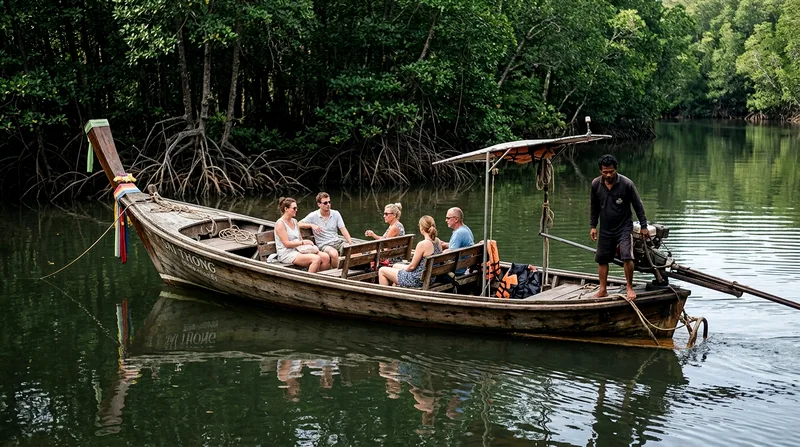
Longtail boats are narrower, with wooden bench seats and no roof on most traditional versions, open to sun and spray. Capacity is usually 6-10 passengers for the mid-size versions used in tourism, though some are smaller. There's no toilet, no real shelter from a sudden downpour, and the ride is noticeably slower and gentler — which some travelers find more pleasant and others find simply too slow.
Seating and amenities
If you need shade, a backrest, or a bathroom break option, the speedboat wins outright. Many speedboat tours also include life jackets as standard, a cooler with water, and sometimes snorkeling gear built into the price. Longtails typically supply life jackets too, but amenities stop there — bring your own water, sunscreen, and a hat, because there's often no canopy covering the whole boat.
Group dynamics
A 25-person speedboat tour means queuing to disembark, sharing snorkeling spots with your whole boatload plus three others from different operators, and less flexibility in the schedule. A longtail group of 6-8 people feels more like a shared day out with strangers than a packaged tour — conversations happen, the guide-to-passenger ratio is tighter, and you're not herded quite as hard. For solo travelers wanting to meet people, the speedboat's bigger group can actually be the better social bet.
Islands and Views: Where Each Goes
Distance is the real divider here, not scenery quality. Phi Phi Islands, James Bond Island, Hong Islands, and the Similan Islands sit far enough from Phuket that only a speedboat makes them a viable day trip. Closer options — Coral Island, Bamboo Island, and sheltered coves inside Phang Nga Bay — are within easy longtail range and don't need a powerful engine to reach comfortably.
Speedboat island access
Speedboats open up the Similan Islands (seasonal, roughly November-April, around 60km offshore and genuinely impressive underwater visibility), the full Phi Phi Islands loop including Maya Bay and Pileh Lagoon, and James Bond Island deep inside Phang Nga Bay — about a 1.5-2 hour run each way. These are the destinations where paying more for speed is justified, because the alternative is either an overnight stay or not going at all.
Longtail boat island access
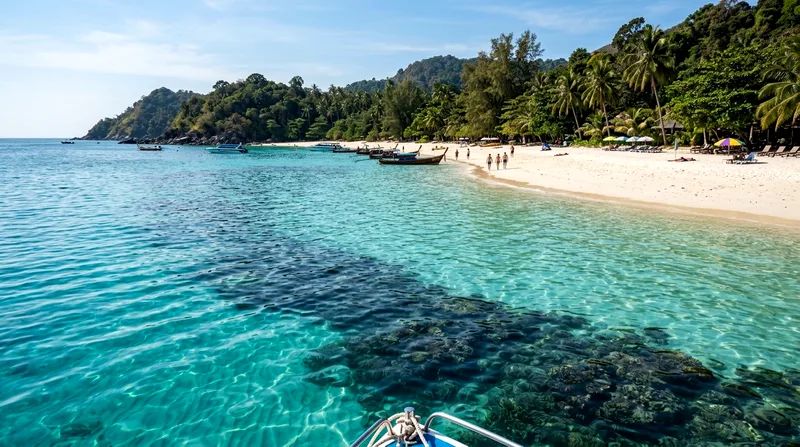
Longtails do well with Coral Island (locally called Koh Hae), roughly 30-40 minutes from Chalong Pier, and Bamboo Island when operators run it as a shorter route from Phi Phi itself rather than from mainland Phuket. They also suit calm, sheltered stops inside Phang Nga Bay close to the mainland — think quiet coves near Koh Poda-style limestone cliffs rather than the open-water crossings speedboats handle. Don't expect a longtail to realistically reach the Similan Islands; the distance and open-sea conditions aren't suited to the hull design.
Crowds and Experience Quality
This is where longtails genuinely outperform speedboats, and it's the part most comparison pages skip. Popular speedboat stops like Maya Bay or James Bond Island get dozens of boats converging within the same two-hour window, because every operator on the island runs a similar schedule. Longtail destinations tend to be less programmed — smaller group sizes and shorter range naturally spread visitors out more.
Tourist density by boat type
At Maya Bay or the main Phi Phi snorkel spots during high season (December-February), expect to share the water with 10+ speedboats at once, sometimes more around midday. Coral Island's longtail bays get busy too, but with smaller boats carrying fewer people each, the on-shore crowding feels less intense. If crowds genuinely bother you, aim for an early departure (before 8am) regardless of which boat type you choose — that matters more than the boat itself.
Noise and atmosphere
Speedboat engines are loud at cruising speed, making conversation difficult during transit — fine if you're there for the islands, not the ride. Longtail engines run at a lower, steadier putter that's easier to talk over, and the open-air design means you hear the water and the wind rather than an engine drone. It's a genuinely different sensory experience, and it's the main reason some travelers — particularly couples and older visitors — choose longtail even when a speedboat would save time.
Which Boat Should You Book?
Book a speedboat if your priority list includes the Similan Islands, a full Phi Phi loop with Maya Bay, or James Bond Island and Phang Nga Bay in one day — these destinations are simply out of comfortable longtail range, and the extra cost buys you distance you can't get otherwise. Families with children under 10 often do better on speedboats too, thanks to the roof, the onboard toilet, and sturdier seating for a full day out.
Book a longtail if you're staying closer to Phuket's southern beaches, want a half-day rather than a full day, or are traveling on a tighter budget. Couples and senior travelers who want a quieter, slower pace — without the engine roar and wave-slamming of a speedboat — tend to prefer it, even knowing it means fewer islands.
If you're weighing Phuket against other Thai bases, it's worth knowing that Krabi and Koh Lanta lean more heavily on longtail culture generally, since Phang Nga Bay and the Hong Islands sit closer to those piers than to Phuket's. Koh Phi Phi itself is really only reachable comfortably by speedboat or ferry from Phuket, not longtail. Meanwhile Koh Samui day trips to nearby islands like Koh Tao tend to default to speedboats too, for the same distance reasons — so this isn't a uniquely Phuket trade-off, it's standard across Thailand's boat-tour destinations.
For fishermen specifically: longtails are the better platform for a half-day fishing charter near Chalong or Rawai, since the slower speed and lower sides suit line fishing better than a speedboat's open deck built for sightseeing stops. If deep-sea fishing further out is the goal, you'll want a dedicated fishing charter boat rather than either tour type covered here.
Whichever you choose, compare current prices and included stops before you book — operators vary more in what's included (lunch, snorkel gear, national park fees) than in the boats themselves.
Frequently asked questions
Is a speedboat tour worth the extra cost in Phuket?
It's worth it if you're visiting islands that are genuinely far — Phi Phi, James Bond Island, or the Similans — where a longtail isn't a practical option anyway. If you're only going to Coral Island or a nearby Phang Nga Bay cove, the extra cost buys you speed you don't really need for a 30-40 minute crossing.
How much does a longtail boat tour cost in Phuket?
Shared longtail trips to nearby islands like Coral Island typically run roughly 600-1,200 THB per person for a half-day. Private hire for a small group runs roughly 1,500-3,000 THB for the whole boat over a few hours, which can be cheaper per head than a shared speedboat seat if you're in a group of three or more.
Can longtail boats reach the same islands as speedboats?
No, not realistically. Longtails are suited to destinations within about 15-20km of the pier, like Coral Island or sheltered Phang Nga Bay coves. Phi Phi, James Bond Island as part of a full-day loop, and especially the Similan Islands require a speedboat's range and speed to be a sensible day trip.
Which boat type is better for families with children?
Speedboats generally work better for families — they have a roof for shade, padded seating, sometimes an onboard toilet, and more stable footing when kids move around. Longtails are fine for a short, calm trip but lack shelter and amenities, which matters more with young kids on a full day out.
Are speedboat tours crowded compared to longtail boats?
At popular stops like Maya Bay in high season, yes — expect 10 or more speedboats converging at once, sometimes more around midday. Longtail destinations like Coral Island get busy too, but smaller boats and shorter schedules tend to spread arrivals out more, so it often feels less packed on shore.